Hidden Pull-Out Trash Can: How to Measure Your Sink Cabinet So It Fits
A double pull-out trash can under the sink hides your garbage and recycling behind a door that looks like every other door in the kitchen. Before you order one, take four measurements: opening width, interior depth, clear height and a clear path. The unit in my kitchen needs at least 14½” of width, 22″ of depth and 19¼” of clear height.
Every kitchen I design ends up with this same quiet upgrade. No bag hanging off a knob. No plastic can in the corner of a beautiful kitchen. I put one in my own and it’s one of the changes I notice every single day.
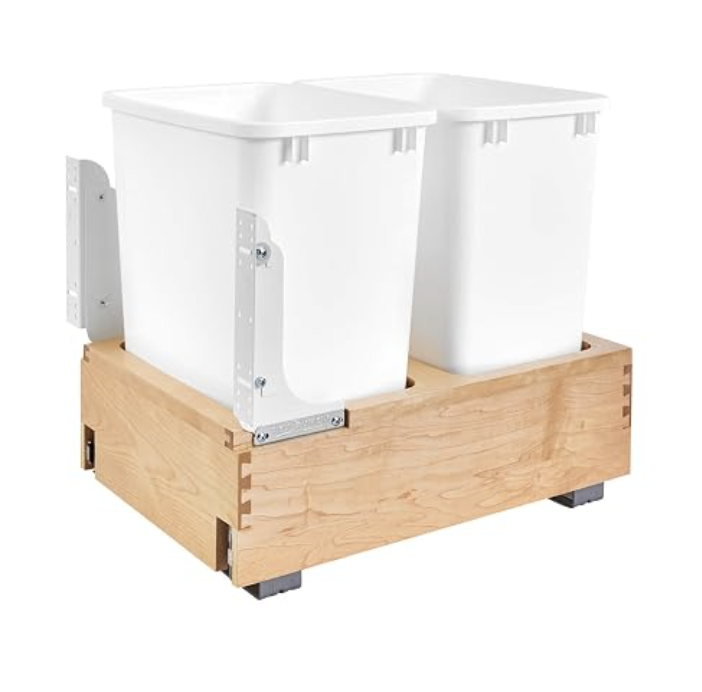
The Pull-Out I Use
This is the Rev-A-Shelf 4WC-18DM2, under my 36″ sink base. Trash on one side, recycling on the other.
- Two 35-quart bins
- Solid maple frame
- Bottom mount, so it sits right on the cabinet floor
- Full-extension slides rated to 150 pounds
- Soft close, so it never slams
Specs: minimum cabinet opening 14½” · unit width 14¼” · depth 21¾” · height 19¼”
I confirmed these numbers with three cabinet hardware suppliers. Retail listings sometimes round them differently, so measure against these.
How to Measure Your Cabinet
Empty the cabinet first so you can see what’s really going on under there. Then grab your tape measure.
1. Opening width (needs 14½” or more)
Measure the clear opening between the face frame stiles, not the outside of the cabinet or the door. If a center stile splits a double-door cabinet, measure only the side you plan to use. Check the top and the bottom, and use the smaller number.
2. Interior depth (needs 22″ or more)
Measure from the back of the face frame straight back to whatever stops you first. That might be the cabinet back, a drain pipe, a shutoff valve or a water filter. Whatever your tape hits first is your real depth.
3. Clear height (needs 19¼” or more)
This is the one almost everybody skips, and it’s the one that sends units back. Stand your tape on the cabinet floor right where the bins will slide, and measure straight up to the lowest thing above it. Usually that’s the bottom of your sink bowl.
If you have a workstation or farmhouse sink, don’t skip this. Those bowls run 10 to 12 inches deep, and a farmhouse apron drops below the countertop. A cabinet that passes on width and depth can still fail right here.
4. A clear path
The bins need one full side of the cabinet open from the floor up. In most sink bases the garbage disposal takes one side, so the pull-out goes on the other. Look for a disposal, a hot water tank, a reverse osmosis unit, a low drain trap or a shutoff valve in the way.
If It Doesn’t Fit, You Still Have Options
- Short on height: try a single-bin unit or a 27-quart double. Lower bins buy back several inches under a deep bowl.
- Short on width: a single 35-quart unit fits an 11″ to 12″ opening. You lose the recycling side but keep the hidden trash.
- Short on depth: check whether the problem is plumbing. A plumber can often reroute a trap higher.
- Both sides blocked: move the pull-out to the base cabinet next to the sink. It costs you one drawer and works just as well.
Add a Foot Pull
This is the detail that finishes it. A foot pull mounts low on the door and opens the pull-out with your foot. Hands full of coffee grounds, raw chicken or a toddler? The door opens anyway.
It also solves a design problem I see all the time. Painted lower cabinets show every fingerprint right where the trash door gets grabbed a dozen times a day, and this keeps that door clean. Pick the finish that matches the hardware already in your kitchen.
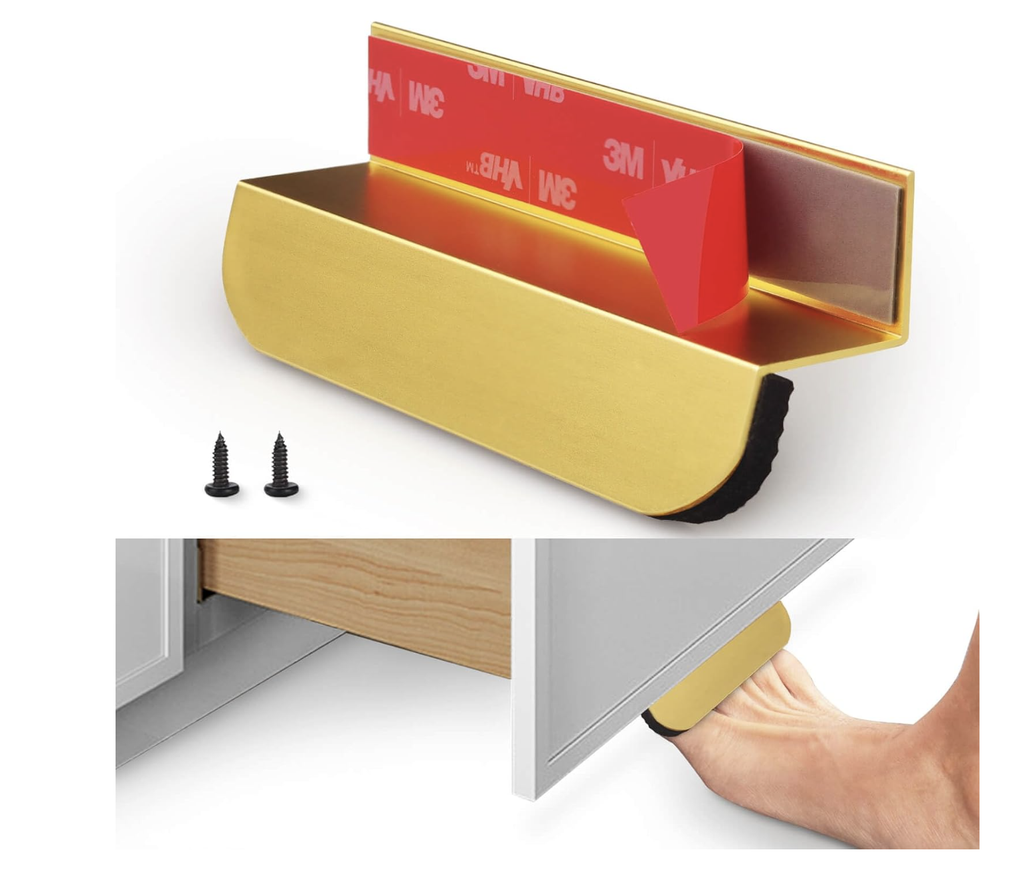
Installation is a handful of screws and a door bracket. It’s an afternoon project you’ll notice every day.
Frequently Asked Questions
What size cabinet do I need for a double pull-out trash can?
For the Rev-A-Shelf 4WC-18DM2, you need at least a 14½” opening, 22″ of clear depth and 19¼” of clear height.
Can a pull-out trash can go under the kitchen sink?
Yes, as long as one side of the cabinet is clear from the floor up. The disposal usually takes one side, so the pull-out goes on the other.
Will a pull-out trash can fit under a farmhouse sink?
Sometimes. Farmhouse and workstation bowls are deep, so measure the clear height under the lowest point of the bowl before you order.
Is a pull-out trash can hard to install?
No. It’s a handful of screws and a door-mount bracket.
Some links are affiliate links, which means I may earn a small commission at no cost to you. Measurements are the manufacturer’s published minimums, so always confirm against the current listing before you order.
A little note: Some links in this post are affiliate links, which means I may earn a small commission if you buy through them, at no extra cost to you. As an Amazon Associate I earn from qualifying purchases. I only share products I love, use, or would put in my own home. Thank you for supporting Design with Rhonda!
You may also like

The things I use, love and can’t stop telling you about.
Fashion, favorites and a little bit of life beyond the house.
Projects, renovations and the know-how to make those big ideas actually happen.
Finishing touches, seasonal inspiration and the details that make a home feel special.
Beautiful rooms, smart design decisions and ideas you can actually use.
What you’ll find around here


join me on instagram